As the nation pauses to reflect this Remembrance Day, we honour the courage and sacrifice of those who served – and the many from The King’s School community who gave their lives in the Great War.
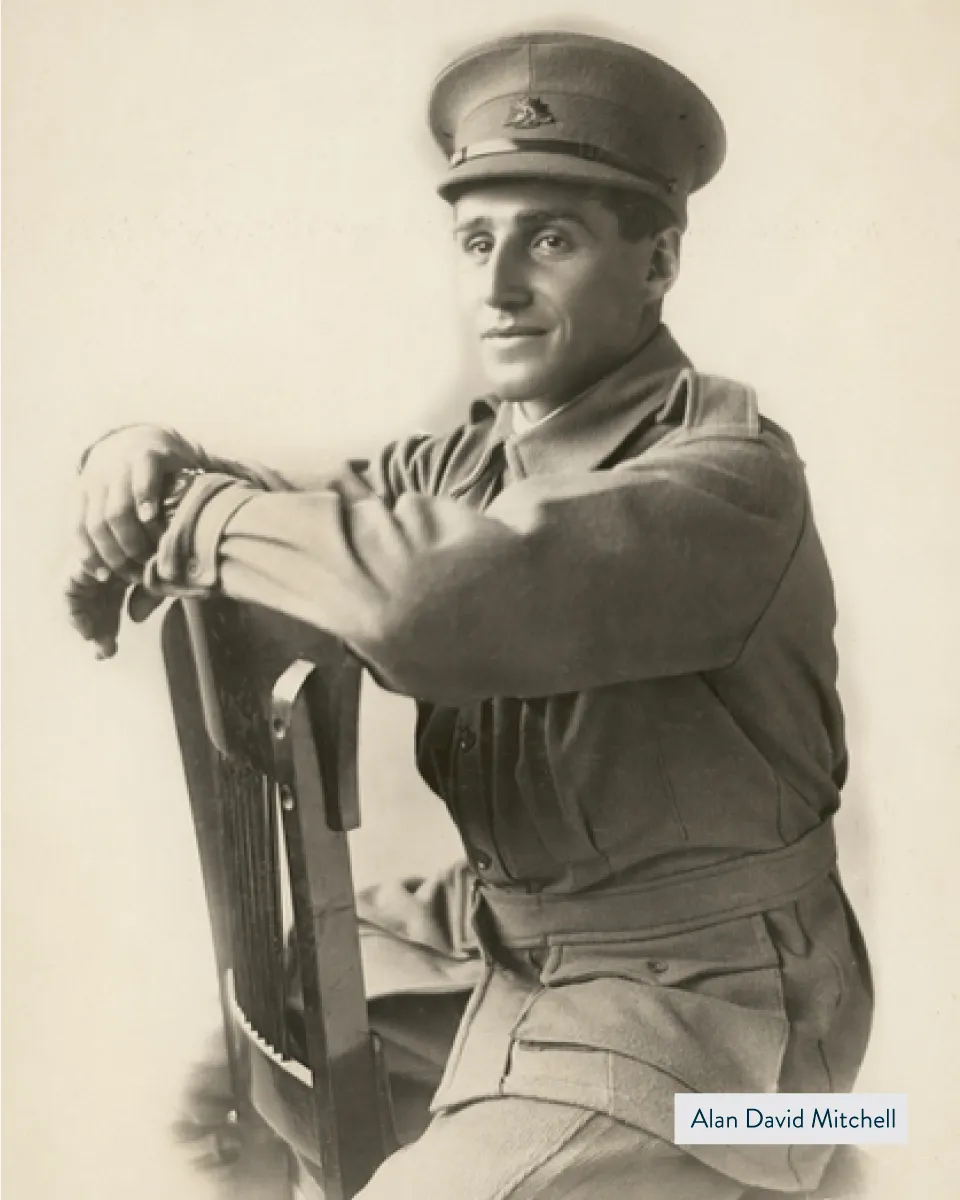
One of these was Private Alan David Mitchell (1891-1915), who attended King’s from 1903-1910, and whose story captures the spirit of service, leadership and enduring legacy that continues to shape our School today.
News of Private Alan David Mitchell’s death reached Australia in May 1915, reported in the Sydney Morning Herald and Sydney Mail. Wounded on the morning of the Gallipoli landing, he was transferred to hospital at Heliopolis, Egypt, where he died on 5 May from wounds inflicted by a Turkish sniper. He was 23. Mitchell was among the first from King’s to fall in the Great War, one of 647 to enlist, 101 would never return.
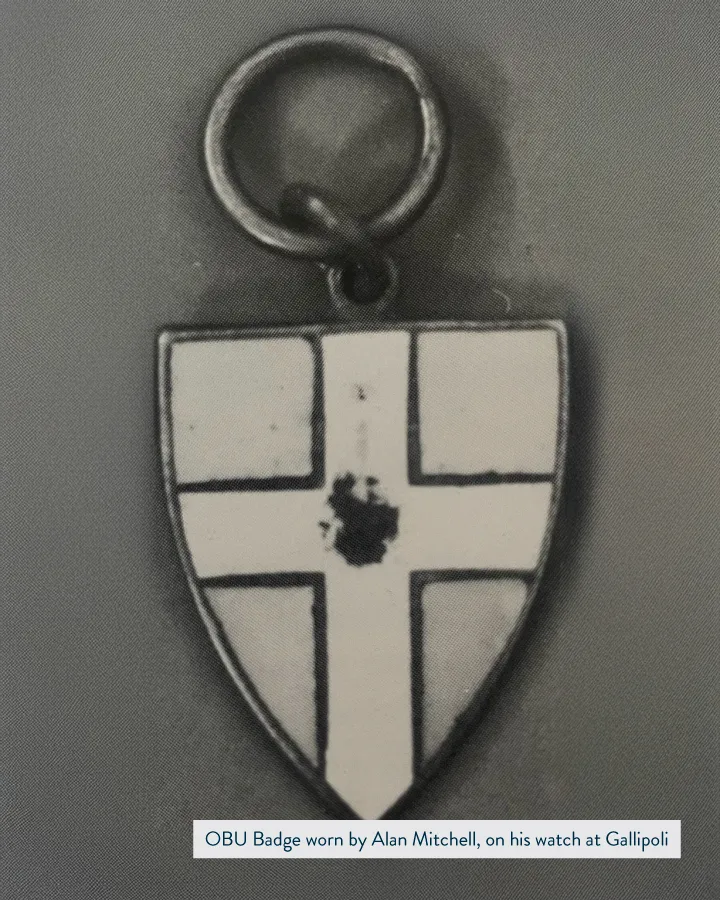
A keen sportsman and energetic organiser, Mitchell had been Secretary of the King’s Old Boys’ Union, a law student at Sydney University, and a clerk in his father’s Manly legal firm. His resting place in the Old Cairo Jewish Cemetery reveals his heritage: his grandfather Michael David Minchel—later anglicised to Mitchell—was a Prussian Jewish immigrant who settled in Sydney in the 1850s. Alan, with his brothers Clive and Karl, was among a small number of Jewish boys at King’s. Known affectionately as “Ikey”, he was a monitor, a cadet of eight years, a 1st XI cricketer and captain of the 2nd XV.
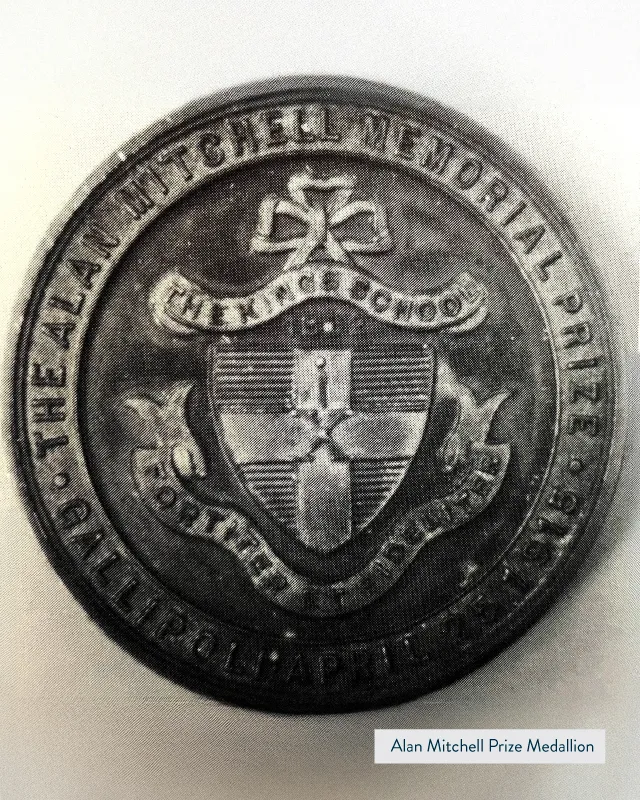
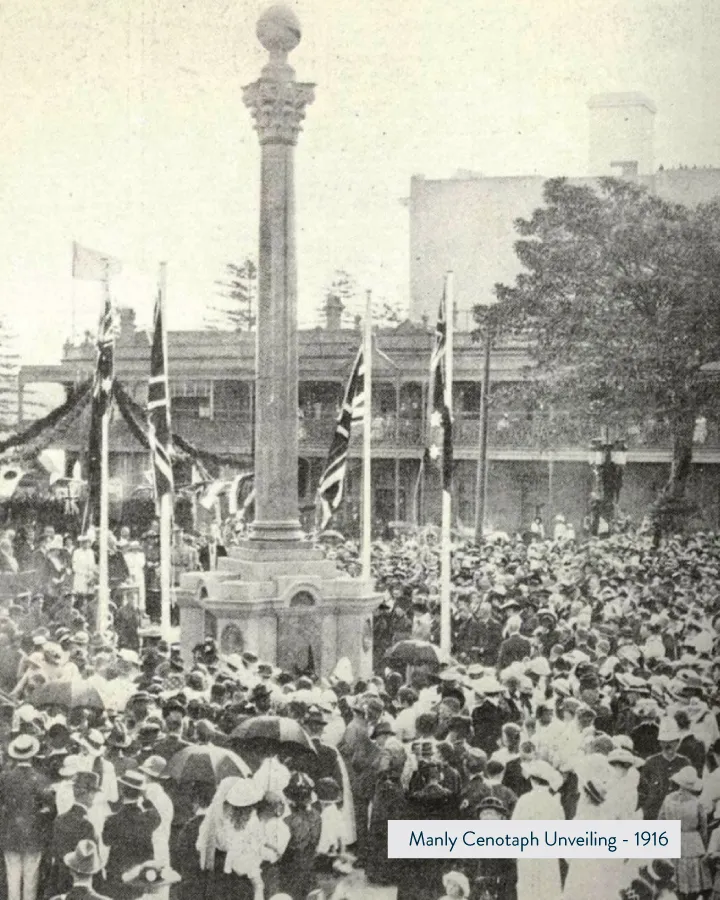
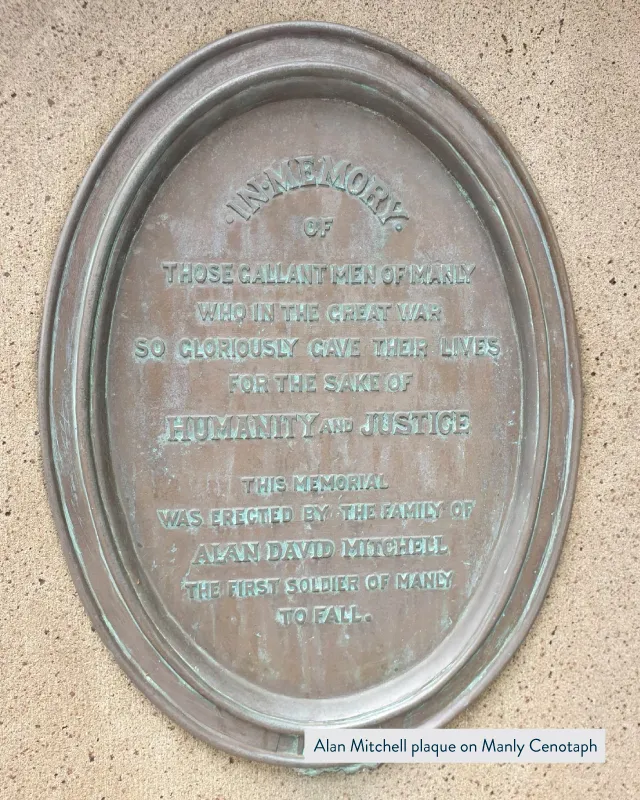
His death moved his father, Mark Mitchell, to action. In 1916 he donated £1,000 to erect Australia’s first Cenotaph, unveiled by the Governor-General on Manly Corso, commemorating “those gallant men of Manly who so gloriously gave their lives.” At The King’s School, his legacy endures in a chapel bell gifted by his father and the Old Boys’ Prize for the “best all-round boy” still awarded to this day.
On Remembrance Day 2025, this extract from the September 1915 issue of the School Magazine speaks of the loss and resonates profoundly 110 years later:
“Our hearts go out to the empty homes where they are mourned. Yet we ourselves feel so proud of them that we can hardly mourn. They pass into the living world of the Invisible. Never, never will we forget them. May we take no lower standard for the kind of boy we aim to produce.”
‘Talibus viris gloriamur; tales alumnos semper patriae praebeamus.’
‘Their bodies are buried in peace, but their name shall live forever.’
Lest we forget.
Image (above): Alan Mitchell and Ken Rogers-Harrison c.1910