
10 July is the anniversary of the start of one of the most momentous air battles in history: the Battle of Britain.
Fought between Nazi Germany and Britain and her allies, it was the first time a military campaign had been fought entirely by air. It was also Germany’s first military defeat, not just in the war but in its efforts to occupy parts of Europe prior to the start of hostilities.
The School Historian has uncovered a secret that has lain hidden for more than 80 years. In our records, we held no information that we were aware of relating to an Old Boy who had served during the Battle of Britain. While some served in the RAF in Europe during World War II, most are listed as serving around the time of D-Day in 1944, not as part of this pivotal conflict.
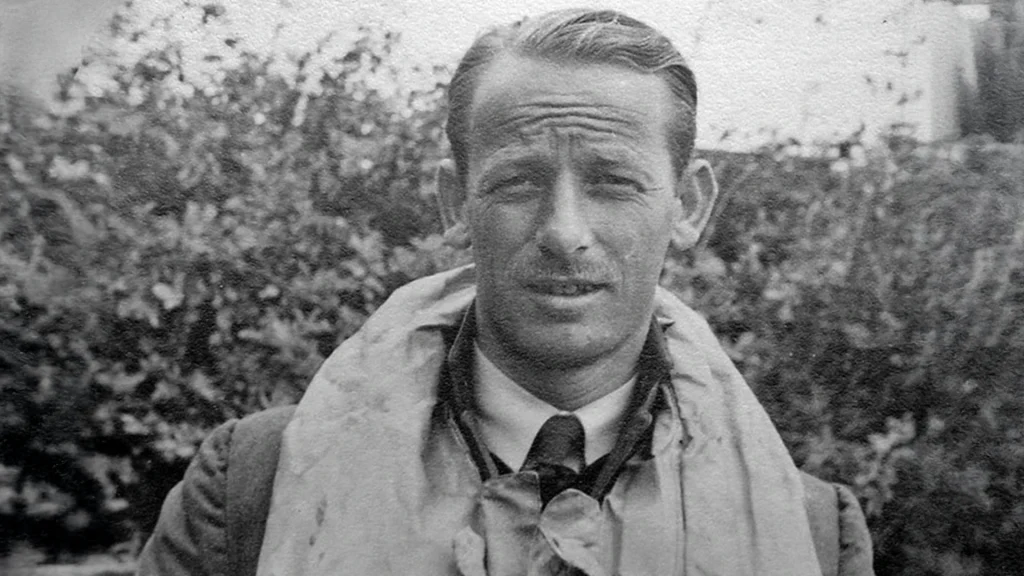
But the King’s Museum and Archive can now reveal that Wing Commander Howard Clive Mayers is just such a hero. Born in Sydney to George and Penelope Mayers, he was one of 13 children. His father was a sugar baron who had made a fortune in Queensland and then did it all again in Kenya.
Clive spent one year at King’s in 1921, where he came second in the Under 12 100 yards handicap in athletics before taking out a form prize for geography. He left King’s at the end of 1921 and headed to Scotch College in Melbourne and then Geelong Grammar, before travelling to England, where he attended Cambridge University to study engineering.
While at university, he joined the University Air Squadron in 1929 and the following year was commissioned into the RAF. Regarded as one of the “Gentleman Riders”, Mayers was commissioned as a Pilot Officer flying Hurricanes on 11 March 1940. When the Battle of Britain started, he was soon in the thick of it. Within days he had shot down several Messerschmitt Me 109s and two Junkers Ju 88s. On 13 August 1940 he was shot down, managed to bail out safely, was rescued, and returned to service.
This account was published in the London Evening Standard:
“After shooting off the tailplane of an ME 110 my Hurricane was hit by what felt like a tornado. I felt a pain in my right side and leg, felt the engine stop, heard hissing noises and smelt fumes. The next thing I remember was falling through the air at high speed and feeling my helmet, flying boots and socks torn off. I landed in the sea three miles from the coast. After 20 minutes I saw a Hurricane searching the bay and recognised it as my Flight Commander who guided a Motor Torpedo Boat to our position.”
Mayers went missing over North Africa on 20 July 1942 and was never seen again. For his bravery during the Battle of Britain and in other theatres of war, he was conferred the DSO, DFC and Bar, and was Mentioned in Dispatches. An outstanding war hero, he was forgotten for decades, but his service will now be properly recorded and recognised more than 80 years later.

