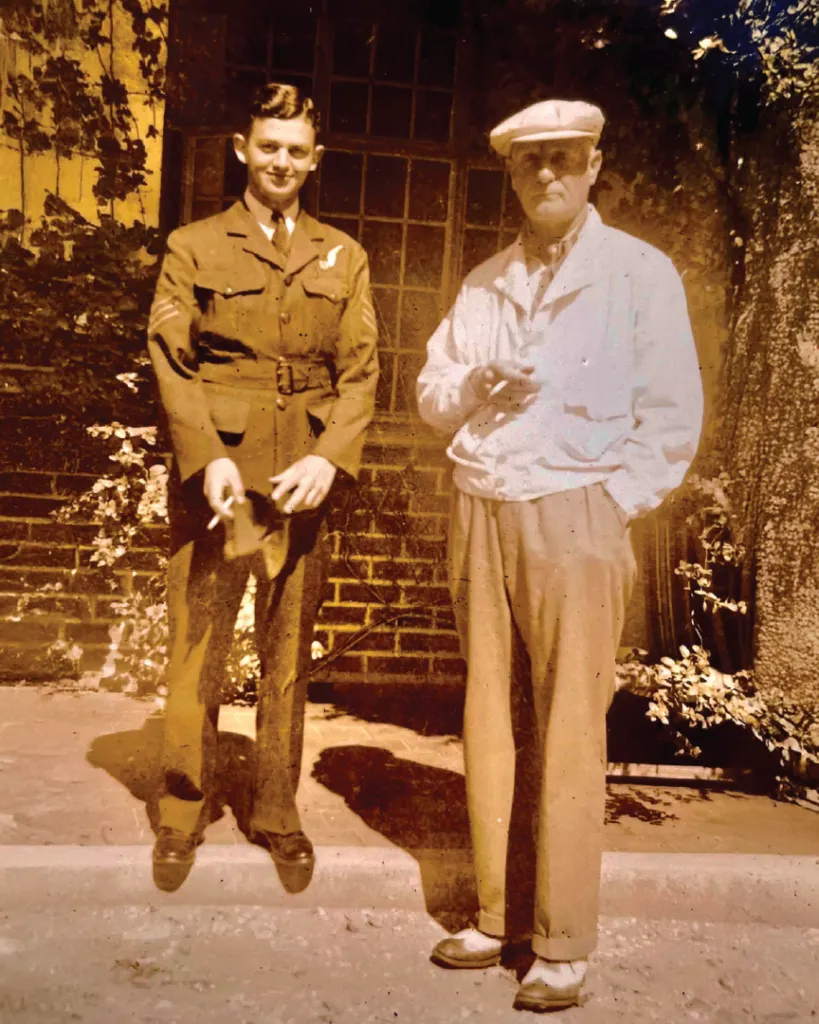
In the lead-up to the D-Day landings on 6 June 1944, Allied bombing missions targeted key enemy infrastructure and aimed to mislead German forces about the true invasion site.
Amid this critical campaign, King’s Old Boy Max Bettington—just 22 years old—joined a Halifax bomber crew of seven, taking off from RAF Leconfield at 10:22 p.m. on 2 June. Their mission: bomb the railway yards at Trappe, near Paris. Max served as the wireless operator and air gunner, responsible for communications and manning the defensive guns.
According to one of the two survivors, the aircraft came under sustained attack from enemy fighters. Flames engulfed the bomber, and with its controls severely damaged, the crew received the order to bale out. At around 6,000 feet, the two survivors parachuted to safety before the aircraft crashed at Dannemarie, approximately 35 km west of their target.
The next day, Squadron Wing Commander Connolly wrote to Max’s mother, informing her that her son was missing in action. He stated:
“The aircraft in which your son was Wireless Operator took off to carry out an attack on enemy territory. This flight represented one of the many courageous efforts called for from the Royal Australian Air Force in this war, and it was undertaken with efficiency and resolution, for which your son and his crew were an inspiration to us all.”
Over the following months, Max’s mother received updates from the Air Ministry. On 17 August, the Red Cross in Geneva reported the loss of five crew members but could not confirm Max’s identity among them. Then, on 30 August, the Ministry received notice that an RAAF member with the number 412300 had died—close to Max’s number, 412306. They wrote:
“I greatly regret that it appears likely that he is believed to have lost his life.” By then, hope for Max’s survival had all but faded. It wasn’t until 13 November 1945 that Max’s mother received official confirmation.
“It is now advised with deep regret that Warrant Officer Bettington is buried in Dreux Town Churchyard, Plot 8, Row 1, Grave 31. I trust that this knowledge will be of some consolation to you in your sad bereavement.”
A note of condolence from the King accompanied a memorial scroll, commemorating Max’s service: “He gave his life to save mankind from tyranny.”
His life was honoured at a Memorial Thanksgiving Service in The King’s Chapel on Sunday, 13 October 1946—a moment of solace for his grieving mother.
The program included a powerful quote from Abraham Lincoln: “That from these honoured dead we take increased devotion to that Cause for which they gave the last full measure of devotion, that we here highly resolve that these dead shall not have died in vain.”
Postscript: Bettington Road, adjacent to King’s, bears the name of Max Bettington’s great-grandfather, James Brindley Bettington (1796–1857), who purchased Oatlands House in 1840 and lived there until 1915.
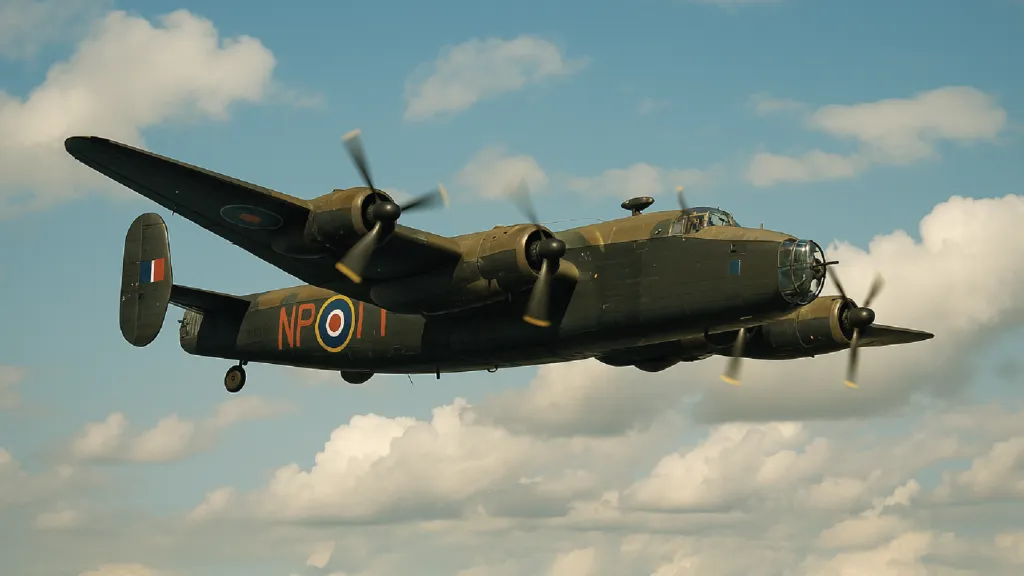
Image 1 (above): An AI image of a Handley Page Halifax bomber similar to the one Max would have flown in.
Image 2 (below left): Max Bettington from a proof sheet produced by Polyphoto Limited in England.
Image 3 (below right): Max Bettington with (possibly) Mr Refells, Joan Refells father ca. 1943-44.